This site and the connected blogs are being used for educational purposes on various topics of Social Studies with my multiple classes. Diverse viewpoints may be posted and are to spark critical analysis and debate. These do not reflect the actual views of this blogger or the institutions associated.
Any copyrighted material on these pages is used in "fair use", for the purpose of study, review or critical analysis only, and will be removed at the request of copyright owner(s).
INTERNATIONAL HOLOCAUST REMEMBRANCE DAY
January 27 is designated by the United Nations General Assembly as International Holocaust Remembrance Day. Since 2005, the UN and its member states have held commemoration ceremonies to mark the anniversary of the liberation of Auschwitz-Birkenau and to honor the six million Jewish victims of the Holocaust and millions of other victims of Nazism.
KEY FACTS
1
The purpose of International Holocaust Remembrance Day is two-fold: to serve as a date for official commemoration of the victims of the Nazi regime and to promote Holocaust education throughout the world.
2
Since 2010, the UN has designated specific themes for the annual commemorations that focus on topics such as collective experiences and universal human rights.
3
In addition to International Holocaust Remembrance Day, many countries hold national commemoration ceremonies on other dates connected to the Holocaust.
Discover how WWI transformed America through the stories of those whose participation in the war to “make the world safe for democracy” has been largely forgotten.
Kennedy Space Center's NASA Day of Remembrance Honors Fallen Astronauts
"Jan. 27, marks the 50th anniversary of the loss of the
crew of Apollo 1. The ceremony also honored the astronauts of the STS-51L
Challenger crew who perished in 1986, the STS-107 crew of Columbia who died in
2003, along with other astronauts who were lost in the line of duty." LINKS:
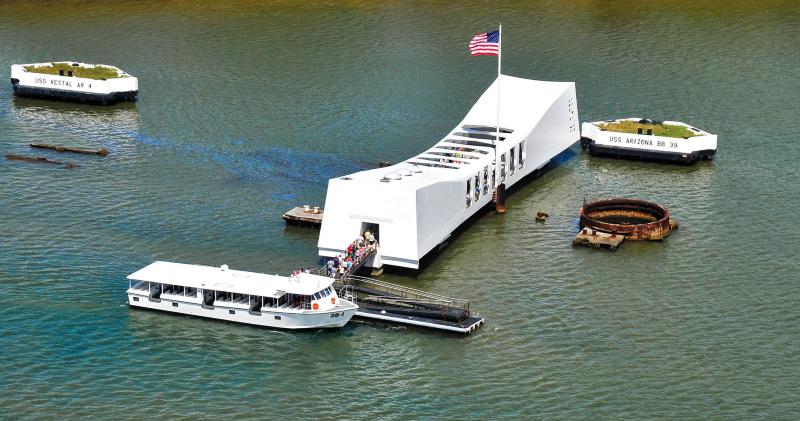
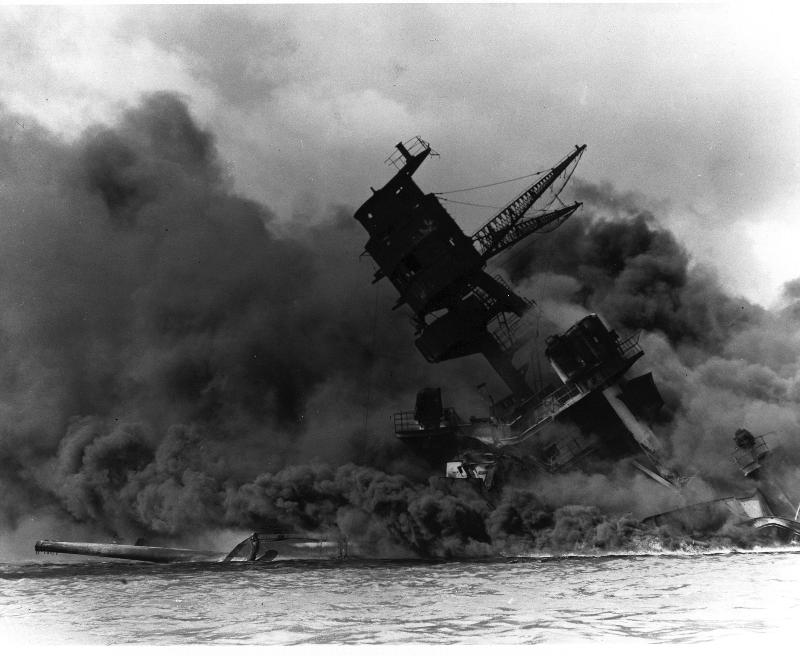
Credit: US Navy photo by Mass Communication Specialists 3rd Class Diana Quinlan
The USS Arizona Memorial
Today is the 75th Anniversary of the bombing of Pearl Harbor and want to thank all the men and women who sacrificed themselves in so many ways to win the war. Here are some links for helping to remember this day and its history.
MOST
Americans know that Memorial Day is about honoring the nation’s war
dead. It is also a holiday devoted to department store sales,
half-marathons, picnics, baseball and auto racing. But where did it
begin, who created it, and why?
At
the end of the Civil War, Americans faced a formidable challenge: how
to memorialize 625,000 dead soldiers, Northern and Southern. As Walt
Whitman mused, it was “the dead, the dead, the dead — our dead —
or South or North, ours all” that preoccupied the country. After all,
if the same number of Americans per capita had died in Vietnam as died
in the Civil War, four million names would be on the Vietnam Veterans
Memorial, instead of 58,000.
But
the practice of decorating graves — which gave rise to an alternative
name, Decoration Day — didn’t start with the 1868 events, nor was it an
exclusively Northern practice. In 1866 the Ladies’ Memorial Association
of Columbus, Ga., chose April 26, the anniversary of Gen. Joseph
Johnston’s final surrender to Gen. William T. Sherman, to commemorate
fallen Confederate soldiers. Later, both May 10, the anniversary of Gen.
Stonewall Jackson’s death, and June 3, the birthday of Jefferson Davis,
were designated Confederate Memorial Day in different states. Memorial
Days were initially occasions of sacred bereavement, and from the war’s
end to the early 20th century they helped forge national reconciliation
around soldierly sacrifice, regardless of cause. In North and South,
orators and participants frequently called Memorial Day an “American All
Saints Day,” likening it to the European Catholic tradition of whole
towns marching to churchyards to honor dead loved ones.
But
the ritual quickly became the tool of partisan memory as well, at least
through the violent Reconstruction years. In the South, Memorial Day
was a means of confronting the Confederacy’s defeat but without
repudiating its cause. Some Southern orators stressed Christian notions
of noble sacrifice. Others, however, used the ritual for Confederate
vindication and renewed assertions of white supremacy. Blacks had a
place in this Confederate narrative, but only as time-warped loyal
slaves who were supposed to remain frozen in the past. The
Lost Cause tradition thrived in Confederate Memorial Day rhetoric; the
Southern dead were honored as the true “patriots,” defenders of their
homeland, sovereign rights, a natural racial order and a “cause” that
had been overwhelmed by “numbers and resources” but never defeated on
battlefields.
Yankee
Memorial Day orations often righteously claimed the high ground of
blood sacrifice to save the Union and destroy slavery. It was not
uncommon for a speaker to honor the fallen of both sides, but still lay
the war guilt on the “rebel dead.” Many a lonely widow or mother at
these observances painfully endured expressions of joyous death on the
altars of national survival.
Some
events even stressed the Union dead as the source of a new egalitarian
America, and a civic rather than a racial or ethnic definition of
citizenship. In Wilmington, Del., in 1869, Memorial Day included a
procession of Methodists, Baptists, Unitarians and Catholics; white
Grand Army of the Republic posts in parade with a black post; and the
“Mount Vernon Cornet Band (colored)” keeping step with the “Irish
Nationalists with the harp and the sunburst flag of Erin.”
But
for the earliest and most remarkable Memorial Day, we must return to
where the war began. By the spring of 1865, after a long siege and
prolonged bombardment, the beautiful port city of Charleston, S.C., lay
in ruin and occupied by Union troops. Among the first soldiers to enter
and march up Meeting Street singing liberation songs was the 21st United
States Colored Infantry; their commander accepted the city’s official
surrender.
Whites
had largely abandoned the city, but thousands of blacks, mostly former
slaves, had remained, and they conducted a series of commemorations to
declare their sense of the meaning of the war.
The
largest of these events, forgotten until I had some extraordinary luck
in an archive at Harvard, took place on May 1, 1865. During the final
year of the war, the Confederates had converted the city’s Washington
Race Course and Jockey Club into an outdoor prison. Union captives were
kept in horrible conditions in the interior of the track; at least 257
died of disease and were hastily buried in a mass grave behind the
grandstand.
After
the Confederate evacuation of Charleston black workmen went to the
site, reburied the Union dead properly, and built a high fence around
the cemetery. They whitewashed the fence and built an archway over an
entrance on which they inscribed the words, “Martyrs of the Race
Course.”
The
symbolic power of this Low Country planter aristocracy’s bastion was
not lost on the freedpeople, who then, in cooperation with white
missionaries and teachers, staged a parade of 10,000 on the track. A New
York Tribune correspondent witnessed the event, describing “a
procession of friends and mourners as South Carolina and the United
States never saw before.”
The
procession was led by 3,000 black schoolchildren carrying armloads of
roses and singing the Union marching song “John Brown’s Body.” Several
hundred black women followed with baskets of flowers, wreaths and
crosses. Then came black men marching in cadence, followed by
contingents of Union infantrymen. Within the cemetery enclosure a black
children’s choir sang “We’ll Rally Around the Flag,” the “Star-Spangled
Banner” and spirituals before a series of black ministers read from the
Bible.
After
the dedication the crowd dispersed into the infield and did what many
of us do on Memorial Day: enjoyed picnics, listened to speeches and
watched soldiers drill. Among the full brigade of Union infantrymen
participating were the famous 54th Massachusetts and the 34th and 104th
United States Colored Troops, who performed a special double-columned
march around the gravesite.
The
war was over, and Memorial Day had been founded by African-Americans in
a ritual of remembrance and consecration. The war, they had boldly
announced, had been about the triumph of their emancipation over a
slaveholders’ republic. They were themselves the true patriots.
Despite
the size and some newspaper coverage of the event, its memory was
suppressed by white Charlestonians in favor of their own version of the
day. From 1876 on, after white Democrats took back control of South
Carolina politics and the Lost Cause defined public memory and race
relations, the day’s racecourse origin vanished.
Indeed,
51 years later, the president of the Ladies’ Memorial Association of
Charleston received an inquiry from a United Daughters of the
Confederacy official in New Orleans asking if it was true that blacks
had engaged in such a burial rite in 1865; the story had apparently
migrated westward in community memory. Mrs. S. C. Beckwith, leader of
the association, responded tersely, “I regret that I was unable to
gather any official information in answer to this.” Beckwith
may or may not have known about the 1865 event; her own “official”
story had become quite different and had no place for the former slaves’
march on their masters’ racecourse. In the struggle over memory and
meaning in any society, some stories just get lost while others attain
mainstream recognition.
AS
we mark the Civil War’s sesquicentennial, we might reflect on Frederick
Douglass’s words in an 1878 Memorial Day speech in New York City, in
which he unwittingly gave voice to the forgotten Charleston marchers. He
said the war was not a struggle of mere “sectional character,” but a
“war of ideas, a battle of principles.” It was “a war between the old
and the new, slavery and freedom, barbarism and civilization ... and in
dead earnest for something beyond the battlefield.” With or against
Douglass, we still debate the “something” that the Civil War dead
represent.
The
old racetrack is gone, but an oval roadway survives on the site in
Hampton Park, named for Wade Hampton, former Confederate general and the
governor of South Carolina after the end of Reconstruction. The old
gravesite of the Martyrs of the Race Course is gone too; they were
reinterred in the 1880s at a national cemetery in Beaufort, S.C. But
the event is no longer forgotten. Last year I had the great honor of
helping a coalition of Charlestonians, including the mayor, Joseph P.
Riley, dedicate a marker to this first Memorial Day by a reflecting pool
in Hampton Park. By
their labor, their words, their songs and their solemn parade on their
former owners’ racecourse, black Charlestonians created for themselves,
and for us, the Independence Day of a Second American Revolution.
David W. Blight, a professor
of history and the director of the Gilder Lehrman Center for the Study
of Slavery, Resistance and Abolition at Yale, is the author of the
forthcoming “American Oracle: The Civil War in the Civil Rights Era.”
A version of this op-ed appears in print on May 30, 2011, on page A19 of the New York edition with the headline: Forgetting Why We Remember. Order Reprints|Today's Paper|Subscribe
First Autumn sunset on a beach. Picture by Moyan Brenn on Flickr (CC)
How can we find sustainable ways to feed the world's exploding population? How can we tackle climate change? How can we confront the moral dilemmas it presents?
To mark Earth Day 2015, this selection of Carnegie Council resources from the past year offers both innovative solutions and searching debates. FEEDING THE WORLD—SUSTAINABLY AND INEXPENSIVELY Eating "Ugly," a New Healthy Trend Jordan Figueiredo, End Food Waste England and France are using creativity to push consumers to buy "ugly" fruits and vegetables. Does the world really need to produce more food? (March 2015, Policy Innovations article) "Soy is a Huge Cloud Over All Agriculture" Irene Pedruelo, Policy Innovations Kathryn Redford has a mission: revolutionize the meat industry. How? By using insects in animal feed, instead of soy or corn. (January 2015, Policy Innovations interview) Local Food Systems: A Green Way of Life, or a Luxury Only for Elites? Kelly Hodgins, Feeding Nine Billion While many celebrate salad greens, the local food movement is cultivating exclusivity and becoming less and less budget friendly. (November 2014, Policy Innovations article) The Next Generation Greenhouse Esther Dyson, EDventure Holdings Four Dutch engineers have developed plant production units the size of a city block and just a few stories high, capable of producing the same volume of crops as a large farm. (August 2014, Policy Innovationsarticle) GEOENGINEERING China Could Move First to Geoengineer the Climate Olivia Boyd, ChinaDialogue As geoengineering advocates talk up the "technofix" approach to climate change, governments may start intervening unilaterally in earth's systems, says Clive Hamilton. (October 2014, Policy Innovations article) CHANGING POLICIES, LEGAL STRUCTURES, AND ATTITUDES Good Environmental Policies Equal More Just Societies Alison Singer, Freelance writer Conserving natural resources and the environment is an integral part of a socially just society. The big challenge is to make sure that decision-makers recognize this—and act on it. (March 2015, Policy Innovations article) The Rights of Nature: Reconsidered Peter Burdon, Adelaide Law School Peter Burdon argues that the environmental rights movement would benefit from more strenuous critical engagement with the question of nature's potential legal "rights." (March 2015, Policy Innovations article) Climate Change and the Future of Humanity Dale Jamieson, New York University; Darrel Moellendorf, Goethe University; Mary Robinson, Mary Robinson Foundation—Climate Justice; Henry Shue, University of Oxford Climate change is already here. The seas are rising, the glaciers are melting, and the atmosphere is warming. How can we work together to set a different course for humanity? (September 2014, Public Affairs Program, transcript, audio, and video clips) Why Climate Change Divestment Will Not Work Scott Wisor, University of Birmingham Instead of devoting scarce resources toward a divestment campaign, we need to direct attention to the more urgent and effective task of placing a price on carbon. (September 2014, Ethics & International Affairs online exclusive) Ethics & International Affairs Symposium: The Facts, Fictions, and Future of Climate Change Published in the Fall 2014 issue to coincide with the UN Climate Summit in September, this Centennial symposium discusses the new ethical and policy dilemmas of climate change. A Call for a Global Constitutional Convention Focused on Future Generations Stephen M. Gardiner, University of Washington The climate problem is usually misdiagnosed as a traditional tragedy of the commons, but this obscures two deeper and distinctively ethical challenges. We must call for a global constitutional convention focused on future generations. The Dawning of an Earth Ethic Scott Russell Sanders, Author So far we have failed to act on the scale or with the urgency required to avert the unfolding disaster of climate change. Why are we failing? What keeps us from caring for the atmosphere as a shared, finite, and fragile envelope for life? Ethical Enhancement in an Age of Climate Change Paul Wapner, American University The world is dashing toward greater and more devastating climate intensification. Nonetheless, opportunities for moral action abound. Moral Collapse in a Warming World Clive Hamilton, Author When it comes to climate change, moral corruption prevails not because the situation is inherently murky, but because confusion has been deliberately sown. Three Questions on Climate Change Clare Palmer, Texas A&M University Climate change will have highly significant and largely negative effects on human societies into the foreseeable future, effects that are already generating ethical and policy dilemmas of unprecedented scope, scale, and complexity. The Changing Ethics of Climate Change Daniel Mittler, Greenpeace International Traditional framings of climate change action being about future generations or simply another dimension of the North-South divide in global geopolitics are not irrelevant today, but they are no longer sufficient. A "Natural" Proposal for Addressing Climate Change Thomas E. Lovejoy, George Mason University One of the fundamental challenges of climate change is that we contribute to it increment by increment, and experience it increment by increment after a considerable time lag.
Carnegie Council's programs, including our free podcasts, audios, and videos, are made possible through the generous donations of supporters like you. Please consider making a tax-deductible gift to the Council by clicking here. We thank you very much for your support. DONATE/JOIN
To host or sponsor a Carnegie Council event, or dedicate an event to a friend, family member, or colleague, please call Karen Deasy at 212-838-4120 ext. 301. To learn about the exclusive privileges of membership in the Carnegie Council's Andrew Carnegie Society, Friends Society, 2114 Society, and Centennial Founders, please visit our Donor Recognition Page.
In December 1966, 140 members of Charlie Company began training in Hawaii under Captain Ernest Medina. The next year, these ordinary young men from across the country would leave for Vietnam and commit one of the worst atrocities in American military history – the My Lai Massacre. Tune in tonight for our Peabody Award-winning film My Laiat 9/8c.
Join the live OVEE online screening event featuring our Academy Award®-nominated documentary Last Days in Vietnam and an interactive panel with film participants Hugh Doyle and Binh Photomorrow night at 8/7c. A special guest appearance by filmmaker Rory Kennedy kicks off an extended preview of the film, which premieres next Tuesday, April 28th at 9/8c (check local listings).




 Podcasts
 RSS
RSS YouTube
 Twitter
  Facebook


